Making components for a lower-carbon form of transport comes with a responsibility to improve the way those components are made. At Miranda, sustainability connects engineering, industrial processes, material choices, our people and the wider value chain.
Our 2025 Sustainability Report brings these areas together through the European Sustainability Reporting Standards and a double materiality assessment. The resulting 2026–2029 strategy sets priorities for climate, circularity, water, people and responsible business conduct.
Progress needs evidence. We report the results, explain the boundaries of the measurements and use what we learn to shape the next decisions.
47.5%lower corporate carbon footprint in 2025 versus 2022
100%renewable electricity supply at our facilities
79.9%recycled content in aluminium bars, reported for 2025
75%estimated reused water share in vibratory finishing, 2025
Reporting basis: Miranda Sustainability Report 2025 (1 January–31 December 2025). Historical biodiversity figures refer to the 2024 baseline. Targets and research scenarios are identified separately from achieved results.
We have calculated our corporate carbon footprint since 2022, covering direct operations, purchased energy and the main categories of value-chain emissions. The 2025 footprint was 47.5% below the 2022 baseline. It was also 14.7% higher than in 2024, showing why sustained progress requires work across the supply chain as well as inside the factory.
Scope 3 remains the largest part of the footprint, led by purchased goods and services. Our decarbonisation plan addresses materials, logistics, business travel, commuting and waste alongside direct operational emissions.
In 2025, Miranda submitted climate targets to the Science Based Targets initiative: reduce Scope 1 emissions by 63% by 2035 against 2022, maintain the target of zero Scope 2 emissions and measure and reduce Scope 3. Submission and validation are separate stages. Our longer-term commitment through the SME Climate Hub is net zero before 2040.
Energy / 2025
Electricity with a different footprint.
Renewable electricity procurement is combined with on-site photovoltaic generation. The 2025 report records 2,562 solar panels and 609.12 MWh generated and used on site.
Electricity and total energy are different measures: renewable sources represented 73.27% of total energy consumption in 2025. LPG for production processes and fuel for vehicles remain part of the energy mix.
Total energy use was 49.5% lower than in 2024, with the report linking the reduction directly to lower production activity. The 2025 inventory also includes 0.32 tCO₂e from charging electric vehicles at public charging stations. These details matter when understanding the figures.
Where the next reductions come from
Electrification of the vehicle fleet, with 27% electrified in 2025.
More recycled inputs and better primary data from suppliers.
Reducing the need for long-distance freight through integrated and regional production.
Resource monitoring, sustainable mobility planning and additional recovery routes for industrial waste.
The 2025 report records only 0.05 tCO₂e of voluntary offsets for Bolt business travel. Historical offset-based statements are not presented here as evidence that 2025 operations had zero gross emissions.
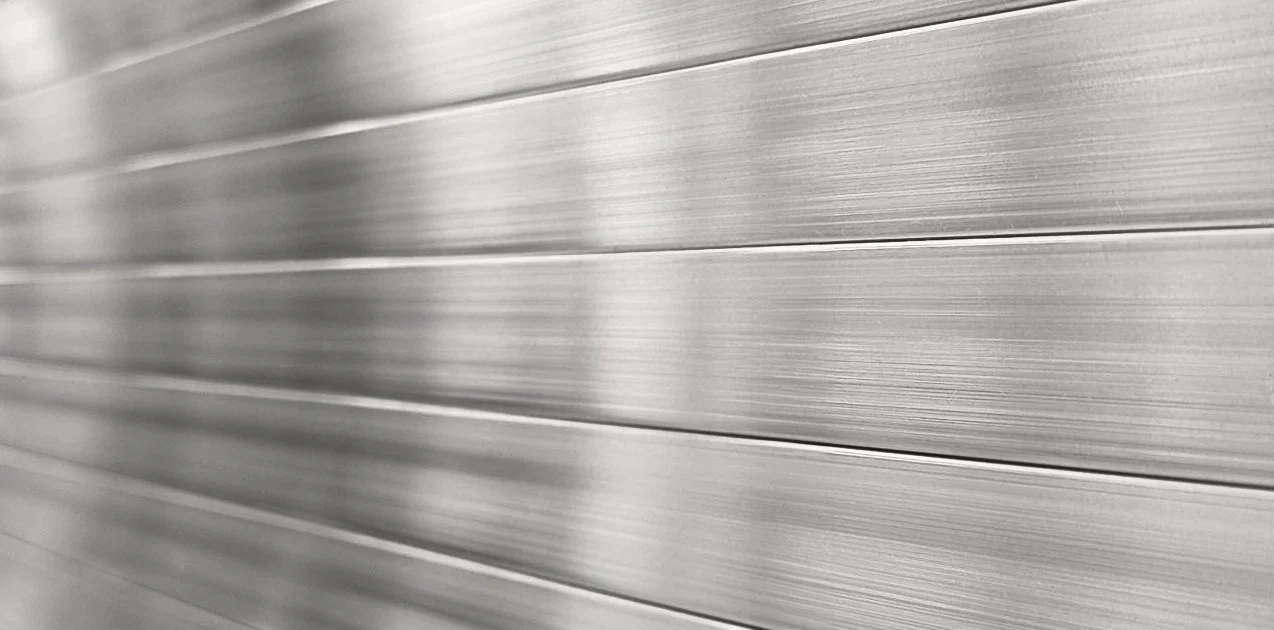
Aluminium material prepared for Miranda’s manufacturing processes
02 / Circular materials & ecodesign
Keep the material. Extend the life.
In 2025, the aluminium bars used by Miranda had a reported recycled content of 79.9%. Across all products and materials used in operations, 888.34 tonnes of secondary materials represented 57.6% of the total. These are different indicators with different boundaries.
Machining chips and aluminium offcuts are recovered and returned to the raw-material stream. Plastic production waste is collected, reprocessed and reused within manufacturing. The aim is to preserve the value of materials through repeated use.
Product design is part of the same approach. The patented MGreen crankset separates its steel chainring from its aluminium crank arm, allowing the damaged element to be replaced and making material separation easier at end of life. Modular XMOD systems similarly support component-level choices and maintenance.
Product transparency
An environmental declaration you can examine.
Life cycle assessment looks beyond the factory gate, from raw material extraction to end of life. Miranda’s work on a family of ten forged aluminium cranks led to a published Environmental Product Declaration in the International EPD System.
EPD-IES-0027768:001 was published on 28 January 2026 and is valid until 27 January 2031. It covers specified models and configurations, uses a worst-case approach for multiple products and conforms to ISO 14025. Its product scope and assumptions are available in the declaration.
The 2025 life cycle study also modelled a future scenario with an additional 10% recycled aluminium. It indicated potential environmental improvements, including a 19% reduction in global warming potential. This is a research scenario, not a reduction already achieved across the range.
Design for repair
A Digital Product Passport project began in 2025 for the Delta product family, developing durability and repairability assessment methods. The intention is to extend product-level information and support more informed decisions about use, maintenance and end of life.
Recover more
In 2025, 72% of the approximately 774 tonnes of waste generated was sent for recovery. Improving routes for the remaining waste — particularly industrial streams currently sent for disposal — is part of the continuing circularity programme.
03 / Water stewardship
Use it carefully. Bring it back.
An industrial wastewater treatment plant treats water used in production, allowing it to return to the vibratory finishing process. The 2025 report estimates that approximately 75% of the water used in this process was treated and reused.
The estimate is based on equipment operating time with treated water compared with operating time using borehole water. It is a process-specific estimate, rather than a claim that 75% of all factory water is reused. Improving direct measurement and identifying the highest-consumption stages by 2027 are priorities.
Chemical management, segregation of waste and monitoring of environmental aspects operate within Miranda’s ISO 14001 environmental management system. Water efficiency, pollution prevention and responsible treatment are considered together.
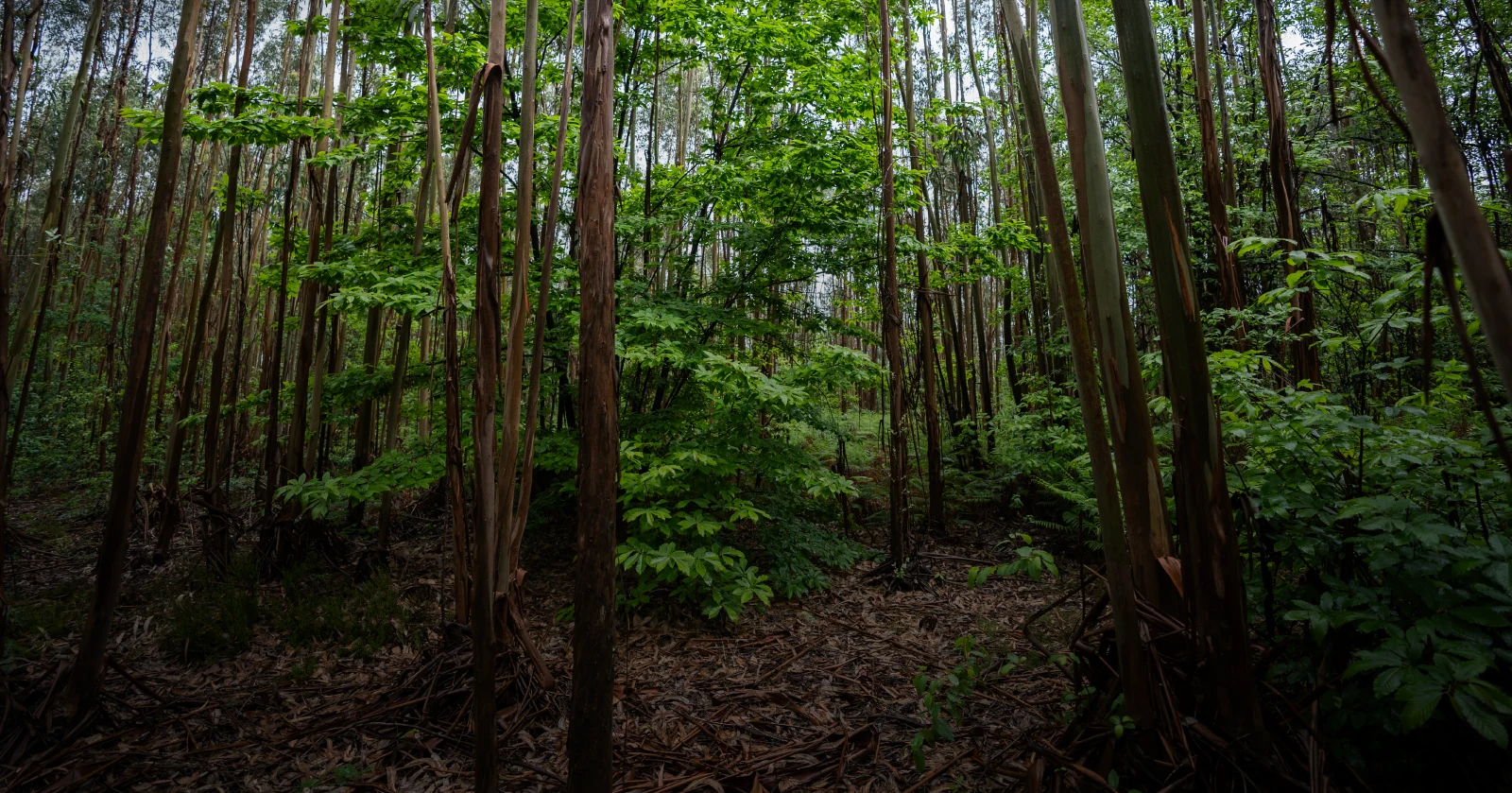
Woodland associated with Miranda’s biodiversity restoration programme
04 / Life beyond the factory
Make room for nature.
In 2023, Miranda acquired 2.4 hectares of forested land near its headquarters. The 2024 baseline assessment identified 61 plant species and 48 animal species, including protected fauna such as Schreiber’s green lizard, Lacerta schreiberi.
This baseline provides a starting point for restoration and ecological management. The project is intended to improve the area’s ecological value over time; the land is not treated as a substitute for reducing emissions.
A separate operational biodiversity risk assessment in 2025 used the Integrated Biodiversity Assessment Tool and the principles of IFC Performance Standard 6. It found no designated protected areas or Key Biodiversity Areas within the assessed area of influence, and concluded that operational risks were low and manageable through existing prevention measures.
05 / People & responsible business
The people behind every component.
Health, safety and development
Miranda employed 177 people at the end of 2025: 91 men and 86 women. The year included 406 on-site curative healthcare consultations, four health screenings, 64 safety, health and environment workplace audits and an average of 14 training hours per employee, including temporary workers.
Listening and acting
Three themed weeks addressed safety, the environment and sustainability. The employee survey recorded 76% satisfaction in 2025, down from 89% in 2024. Recognition, workload, stress and thermal comfort are among the identified improvement areas. Listening is part of the work, alongside practical changes.
A responsible value chain
The Supplier Code of Conduct and Miranda Supply Self Assessment bring environmental, social and governance expectations into procurement. The 2025 supplier network included 538 suppliers, with 64% based in Portugal. The strategy aims for responses from at least 80% of the top 100 suppliers to the ESG questionnaire by 2029.
Employees and external stakeholders can raise concerns through the existing confidential reporting channel.
Certification against the ASI Performance Standard in 2025 adds environmental, social and governance criteria to Miranda’s work across the aluminium value chain. It complements our established ISO 9001 and ISO 14001 management systems.
Recognition includes Águeda Recicla+ Level IV, COTEC Innovative Company status in 2025, selection as a finalist for the COTEC–Caixa Sustainability Innovation Award and the Business Intelligence Group’s Sustainability Leadership Award in 2024.
Collaboration extends through the UN Global Compact, Shift Cycling Culture, BCSD Portugal, ResponsibleSteel, the Aluminium Stewardship Initiative and the Cycling Industry Sustainable Packaging Pledge. Memberships and commitments support the work; they are distinct from product certification.
Reporting basis: Miranda Sustainability Report 2025 (1 January–31 December 2025). Historical biodiversity figures refer to the 2024 baseline. Targets and research scenarios are identified separately from achieved results.
Let's build what's next.
A component. A complete drivetrain. A partnership.